
Modern hospitals, medical facilities and even ambulances are brimming with technology which must meet a number of standards to ensure safe operation.
Medical technology can neither be vulnerable to electromagnetic interference nor cause interference which threatens other equipment.
This makes EMC testing a critical part of the approval process for products used in modern medicine and healthcare.
What is electromagnetic compatibility (EMC) testing?
Electromagnetic Compatibility (EMC) is the ability of an electrical or electronic device or system to operate satisfactorily within its intended electromagnetic environment, without generating electromagnetic emissions that exceed the limits specified by the applicable product standards.
It also includes the ability of the device or system to withstand electromagnetic disturbances present within the designated environment without unacceptable degradation in performance.
As a result of non-compliance, a system can produce electromagnetic interference (EMI) which can pose a threat to other electrical equipment or systems.
Likewise, equipment can itself be vulnerable to malfunction if exposed to an electromagnetic field. Manufacturers of medical technology need to ensure ‘essential performance’ as well as whether the equipment simply continues operating.
Within the medical and healthcare sectors, equipment can include:
- Patient monitors and vital-sign equipment
- Ventilators and respiratory equipment
- Diagnostic equipment
- Defibrillators
- Medical imaging systems
- Electrically powered hospital beds
The malfunction of such equipment can not only be serious – it can be fatal.
As such, any medical devices used must undergo careful electromagnetic compatibility (EMC) testing and approval.
In short, medical equipment must work safely when surrounded by the electrical and wireless technology it is reasonably expected to encounter.
What EMC standards apply to medical technology?
EN / IEC 60601 covers the basic safety and essential performance of medical electrical equipment.
The EMC of medical equipment is somewhat unique as the consequences of electromagnetic interference and malfunction can be life-threatening. As a result, ‘essential performance’ has to be maintained, not just basic functioning.
EN / IEC 60601-1-2 deals specifically with electromagnetic disturbances and establishes requirements for emissions and immunity for most international markets.
However, the precise regulatory route to the approval of medical technology depends on the specific country in which the equipment is sold. In the UK, manufacturers also need to consider other applicable regulatory requirements around product safety.
How is the EMC of medical technology tested?
Electromagnetic compatibility (EMC) testing looks at two factors – emissions and immunity.
Emissions
Radiated emissions are the electromagnetic fields generated by a piece of electrical medical technology during its operation – including when on standby.
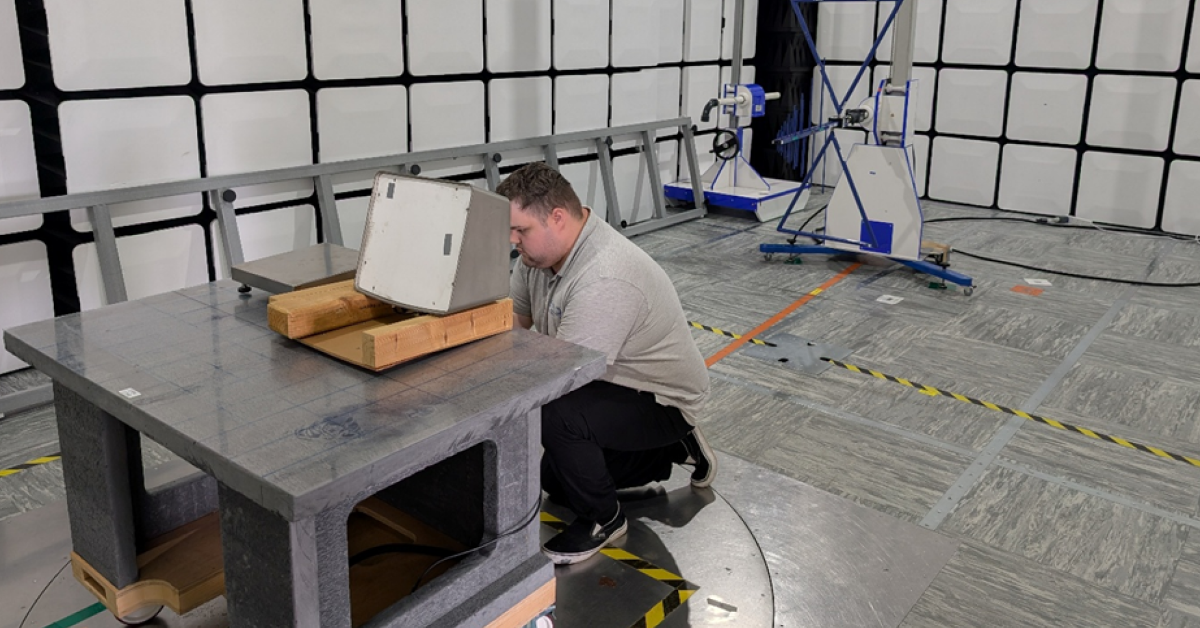
The strength of the electromagnetic field created is typically tested in a semi / fully anechoic chamber – a special environment made up of a metal box with ferrites and absorbers.
Whilst in operation, antennas at fixed distances record the level of electromagnetic emissions produced by the medical device to ensure they do not exceed the levels defined by EN IEC 60601-1-2.
As well as radiated emissions, conducted emissions must also be measured. Conducted emissions constitute unintentional electrical noise which the medical device generates and potentially passes to other equipment via power or wired network cables.
Conducted emissions are evaluated using a Line Impedance Stabilisation Network (LISN). The LISN provides a defined impedance to the power line and isolates the device under testing to accurately measure the radio frequency energy it emits.
Immunity
Immunity testing evaluates a medical device’s susceptibility to electromagnetic disturbances. These disturbances may be introduced by radiated RF fields applied to the device enclosure or by conducted RF disturbances coupled onto power and signal lines.
For medical equipment, immunity testing is intended to demonstrate that the device maintains its defined “essential performance” when exposed to specified electromagnetic disturbances. The applicable product standard establishes the performance criteria, which should also be considered in conjunction with the manufacturer’s risk analysis.
Medical product standards also define specific testing parameters and additional immunity tests to address the potential effects of portable wireless transmitters, such as mobile phones. These devices can generate significantly stronger electromagnetic fields when operated in close proximity to medical equipment.
Accordingly, the applicable standard specifies proximity-field immunity tests at particular wireless communication frequencies, with test field strengths typically ranging from approximately 9 V/m to 28 V/m, depending on the frequency and applicable test requirement.
Approval
The main EMC standard for medical equipment is EN / IEC 60601-1-2.
To be approved against EN / IEC 60601-1-2, testing must be conducted by a UKCA-designated technical service within a suitably-controlled environment.
Here at NMi ETS, we are UKAS accredited for testing medical devices and have helped many innovations successfully reach the market to improve and save lives.
What should manufacturers of medical technology consider before EMC testing?
Before submitting a medical device for EMC testing, manufacturers should identify:
- Intended environment and scope of use
- What constitutes maintaining ‘essential performance’
- Potential options for product configuration or accessories
Overall, testing early in the development process (before mass production) can help identify any potential failures in EMC and remove them from the final design.
Looking for EMC testing for medical devices?
Part of the NMi Group, NMi ETS is an independent UKAS-accredited and award-winning provider of EMC testing, certification, advice and troubleshooting for the majority of product types.
With over 25 years’ experience, we’ve played a critical role in the testing and approval of many medical technologies used in healthcare throughout the UK and across the world.
Preparing a medical device for EMC testing? Talk to NMi ETS today: https://landing.etsemc.co.uk/perfect-partner-emc-testing
Back